Call Us Today! +18447427438 | [email protected]


Why Structured Cabling for New Homes Is Worth Planning Before Construction

Building a new home in Canada is an opportunity to plan more than the layout, lighting, and finishes. It is also the right time to think about how your home will stay connected as technology changes. From home offices and entertainment systems to connected appliances and security equipment, modern households depend on a reliable network.
Structured Cabling for New Homes is worth considering early because the best time to install network wiring is usually before insulation and drywall cover the framing. Planning ahead can make installation more straightforward, reduce disruption, and help you avoid limitations when you want to add new devices later.
Whether you are building a detached home, a townhouse or a custom property, a well-planned cabling system can provide a practical foundation for everyday connectivity.
What Is Structured Cabling for New Homes?
Structured cabling is an organised system of cables, wall outlets and central connections that links different areas of a home to its network equipment. Instead of relying entirely on wireless connections, homeowners can use wired connections for devices that benefit from a consistent network connection.
A residential structured cabling system may include:
- Ethernet cabling for computers, televisions, and other compatible devices
- Network outlets in home offices and entertainment areas
- Centralised cable termination points
- Connections for wired and wireless access points
- Conduit or pathways for potential future upgrades
- Clear cable labels for easier troubleshooting and maintenance
The exact setup depends on the home’s size, floor plan, intended devices and budget. Planning the system around your household needs is more useful than installing outlets without considering where they will be needed.
Why Should You Plan Cabling Before Construction?
1. Installing Cables Is Easier Before the Walls Are Closed
One of the biggest advantages of planning Structured Cabling for New Homes early is access to the wall cavities, ceiling spaces, and framing.
Before drywall and insulation are installed, technicians can often route cables more easily. Once finishing work is complete, adding a new connection may require access through finished surfaces, followed by repairs and repainting.
For example, you might initially plan to use a spare bedroom as a guest room, only to turn it into a permanent home office later. If network cabling was considered during construction, adding the necessary equipment can be much simpler.
Early planning also gives your builder and cabling installer an opportunity to coordinate routes and connection locations before they become difficult to access.
2. It Helps Create More Reliable Connectivity
WiFi is convenient, but wireless performance can vary depending on the building layout, construction materials, interference, and the distance between devices and access points.
A wired Ethernet connection can provide a stable network link for compatible equipment such as desktop computers, gaming consoles, televisions, and workstations.
Structured cabling can also support wired connections to appropriately placed wireless access points. These access points can distribute WiFi throughout the house while using wired connections to communicate with the main network.
This approach can be particularly useful in larger Canadian homes, multi-storey properties, and houses with finished basements, where a single wireless router may not provide consistent coverage everywhere.
3. It Supports Remote Work and Home Offices
Working from home has made dependable connectivity an important consideration for many Canadian households.
Video meetings, cloud applications, file transfers, and remote desktop tools can place regular demands on a home network. A wired connection may help reduce wireless interference and provide a more consistent connection for compatible work equipment.
If you are planning a home office, consider network outlets near the intended desk location. You may also want additional connections for a docking station, printer, or other equipment.
Even if your work arrangements change later, a properly planned connection can give you more flexibility when rearranging the room.
4. It Reduces the Need for Future Wall Modifications
A common construction oversight is planning only for the devices the homeowner intends to purchase immediately.
Over time, you may add a home entertainment system, a new workstation, network-attached storage, or additional connected devices. If there are no suitable cable pathways, accommodating these additions can become more complicated.
Planning spare cable routes and suitable conduit during construction can make future upgrades easier. Conduit is particularly useful along selected pathways where you may want to pull new cables later, provided the route remains accessible and appropriately sized.
It is not necessary to install every possible connection on day one. The goal is to create a flexible foundation for changes that may happen over the coming years.
5. It Can Make Network Equipment Easier to Manage
A central, organised location for network connections can make a home system easier to understand and maintain.
Depending on the design, this location may contain a patch panel, network switch, router and connections for incoming internet service. The equipment should have appropriate power, ventilation, physical protection, and enough room for maintenance.
Clear labels on cables and corresponding outlets can also save time when troubleshooting a connection or changing equipment.
During the planning stage, discuss where this equipment should be located with your builder and installer. A cramped or poorly ventilated cupboard may not be suitable for every installation.
Which Areas of Your New Home Should Have Network Cabling?
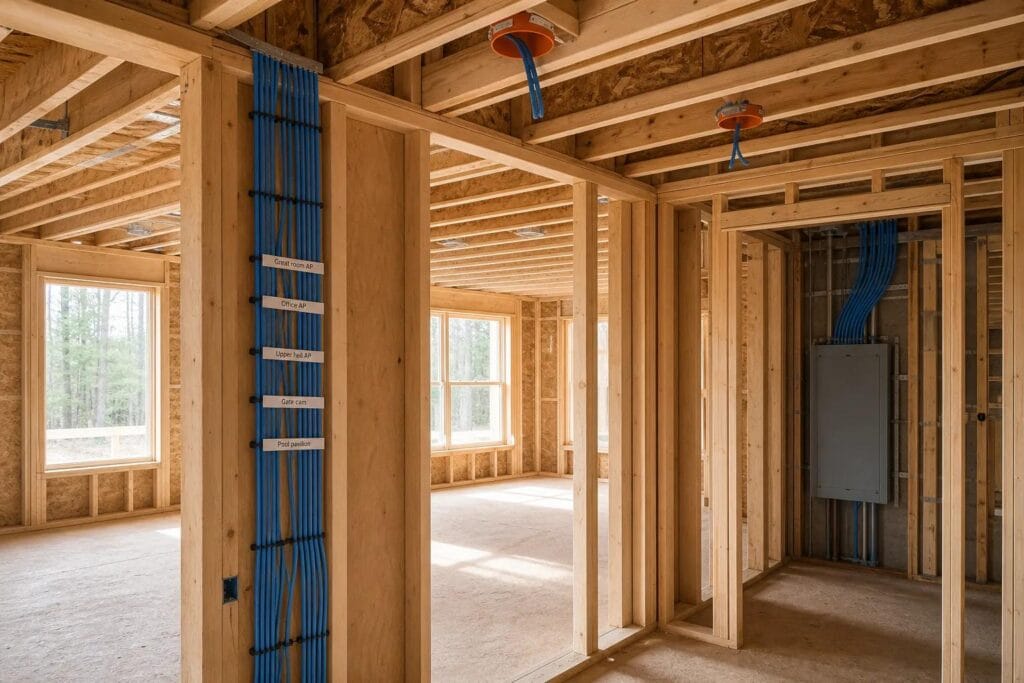
The right locations depend on your floor plan and how you expect to use each room. Consider these areas during the design stage.
Home Office
Plan at least one suitable network outlet near the intended workstation. Additional outlets may be useful for computers, docking stations, printers and other wired devices.
Living Room and Entertainment Areas
Consider connections behind or near the television, media cabinet and other equipment locations. Wired connectivity may be useful for compatible streaming devices, consoles and entertainment equipment.
Bedrooms
Bedrooms may eventually become workspaces, study areas or entertainment rooms. Consider whether selected rooms would benefit from a network outlet, particularly if their purpose may change over time.
Ceiling Locations for Wireless Access Points
If you want strong wireless coverage across several floors, ask your installer to assess potential access point locations. Wired connections to suitable access points can improve the flexibility of your network design.
The best locations depend on the house layout, construction materials, and equipment being used.
Security and Entry Points
If you plan to install wired cameras or other network-connected security equipment, discuss the required cable routes before construction is complete. Locations should be selected according to the equipment specifications, power requirements, and practical mounting positions.
Basement and Future Renovation Areas
If you intend to finish your basement later, consider planning network access and cable pathways before the space is enclosed. The same principle applies to a future workshop or other usable area, where permitted routes and site conditions allow.
Choosing the Right Cable for Your Home
Not every home requires the same cabling specification. Your installer should consider the network equipment, connection distances, intended applications, and possible future upgrades.
Common options include the following.
Cat5e: Can support many everyday home networking needs when properly installed. It may be suitable for certain existing systems, depending on the required performance.
Cat6: A common option for residential Ethernet installations. It can support Gigabit Ethernet and may support higher data rates over shorter distances, depending on the installation and equipment.
Cat6A: Can support 10 Gigabit Ethernet over standard channel distances up to 100 metres when the complete channel is correctly designed and installed. It may be worth considering where higher performance or additional headroom is required.
The cable category alone does not guarantee a particular internet speed. Performance also depends on terminations, the network switch, router, connected devices, service plan and the overall installation.
Ask your installer to explain the options and recommend a solution that suits your current requirements without paying for features you do not need.
How to Coordinate Structured Cabling With Your Builder
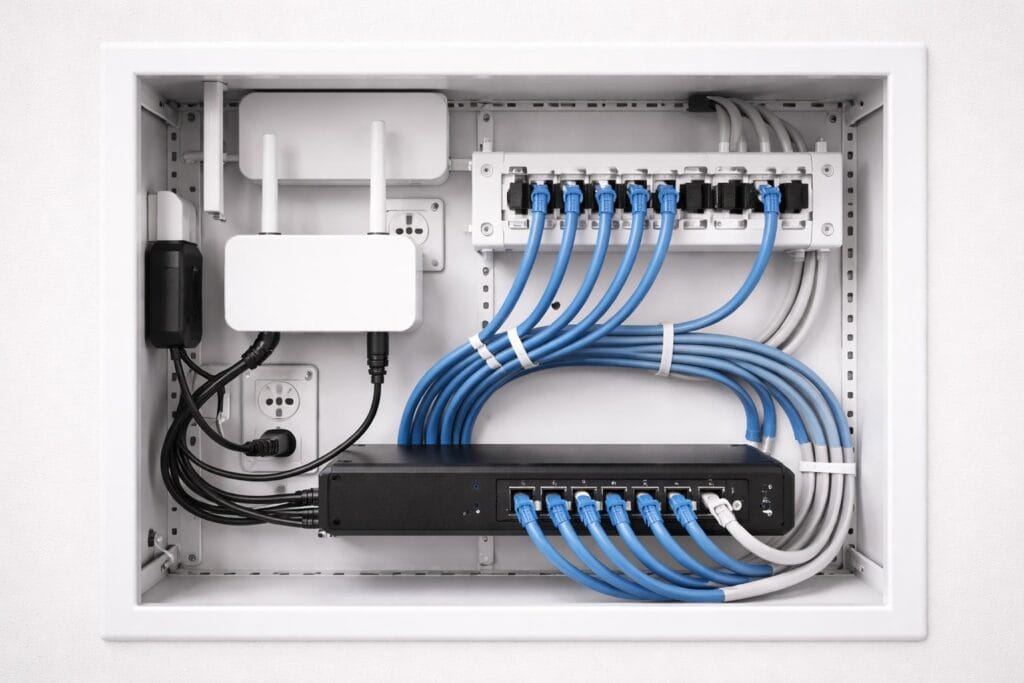
Structured cabling works best when it is included in the construction plan rather than treated as a last-minute addition.
Before work begins, consider these steps:
- Review the floor plan. Mark the proposed locations of desks, televisions, access points and other equipment.
- Discuss the network equipment location. Identify a practical central point with suitable power, ventilation and access.
- Coordinate with the construction team. Confirm the installation schedule and cable routes with the builder and relevant trades.
- Plan pathways for future upgrades. Consider conduit or spare routes in areas likely to change.
- Confirm installation requirements. Check the cable type, outlet positions, separation from electrical wiring, and applicable building requirements with qualified professionals.
- Request testing and documentation. Ask for appropriate cable testing, clear labels, and a record of outlet locations before the walls are closed.
The exact installation stage will depend on the project schedule. Make sure the cabling work is coordinated before insulation and drywall prevent easy access to the framing.
Common Mistakes to Avoid
Even a well-designed home can become difficult to upgrade if the network plan is overlooked. Watch out for these common mistakes.
Planning only for current devices. Think about how rooms may be used in the future, not just what you own today.
Choosing cable without considering the application. The most expensive cable is not automatically the best choice for every connection.
Ignoring the central equipment location. Network equipment needs practical access, power, and suitable environmental conditions.
Forgetting to label connections. Unlabelled cables can make troubleshooting and future changes more difficult.
Assuming WiFi will solve every connectivity need. Wireless access is important, but some devices benefit from wired connections.
Leaving planning until after drywall. Late changes may require additional labour and disruption to finished surfaces.
Not coordinating with the builder. Cable routes, construction schedules, and relevant electrical requirements should be discussed before installation.
Why Choose a Professional for Structured Cabling?
A professional installer can help translate your floor plan and technology requirements into a practical cabling layout.
This includes assessing connection locations, choosing appropriate materials, coordinating cable routes, organising the termination point, and testing the completed installation. Professional planning can also help identify potential conflicts with other building systems before work is completed.
Sharif Tech Canada provides networking and structured cabling services alongside its broader residential technology solutions. You can explore the company’s Services page to learn more about its offerings, or visit the Contact page to discuss your project requirements.
If your new home will include connected lighting, climate controls, or other automation features, it may also be useful to review Sharif Tech Canada’s Smart Home Automation services. Planning the network and related technology together can help create a more coordinated installation.
Frequently Asked Questions
1. What is structured cabling for new homes?
Structured cabling for new homes is an organised network wiring system that connects selected rooms and devices to a central distribution point. It may include Ethernet outlets, patch panels, and pathways for future connections.
2. When should structured cabling be installed during construction?
Planning should begin during the design stage. Cable installation is generally coordinated while framing and pathways are accessible, before insulation and drywall close the walls.
3. Is structured cabling better than WiFi?
They serve different purposes. Wired Ethernet can provide a consistent connection for compatible devices, while WiFi offers convenient wireless access. Many homes benefit from using both together.
4. Which Ethernet cable is best for a new home in Canada?
Cat6 is a common residential option, while Cat6A may be appropriate for certain higher performance requirements. The best choice depends on cable routes, equipment, budget, and future needs.
5. Does structured cabling increase home value?
It can make a property more adaptable to modern networking and connected technology needs. However, any effect on resale value depends on the property, local market, and buyer preferences, so a financial return should not be assumed.
6. Can structured cabling support smart home technology?
Yes. Appropriate network cabling can support compatible smart home equipment, network switches and wired and wireless access points. Individual devices may still use WiFi or other communication methods.
7. Can I add structured cabling after moving into my home?
Yes, in many cases. The available routes, finished surfaces, building layout and access to ceilings or wall cavities will affect the complexity of the work. Planning during construction generally provides easier access.
8. Should every room have an Ethernet outlet?
Not necessarily. Prioritise rooms and locations where wired connectivity is likely to be useful, such as home offices and entertainment areas. Spare pathways can provide flexibility without installing unnecessary outlets everywhere.
Plan Your Home Network Before Construction Is Complete
A reliable home network starts with decisions made before the walls are finished. By considering equipment locations, cable routes, central network equipment, and future upgrades early, homeowners can create a more flexible foundation for work, entertainment, and connected living.
Structured Cabling for New Homes is not about installing the maximum amount of wiring. It is about making thoughtful decisions that suit the home, the people living in it, and the technology they may use in the future.
If you are planning a new build or custom home in Canada, explore Sharif Tech Canada’s networking and structured cabling services and discuss your requirements before construction reaches the finishing stage.
A little planning now can make future connectivity changes much easier.